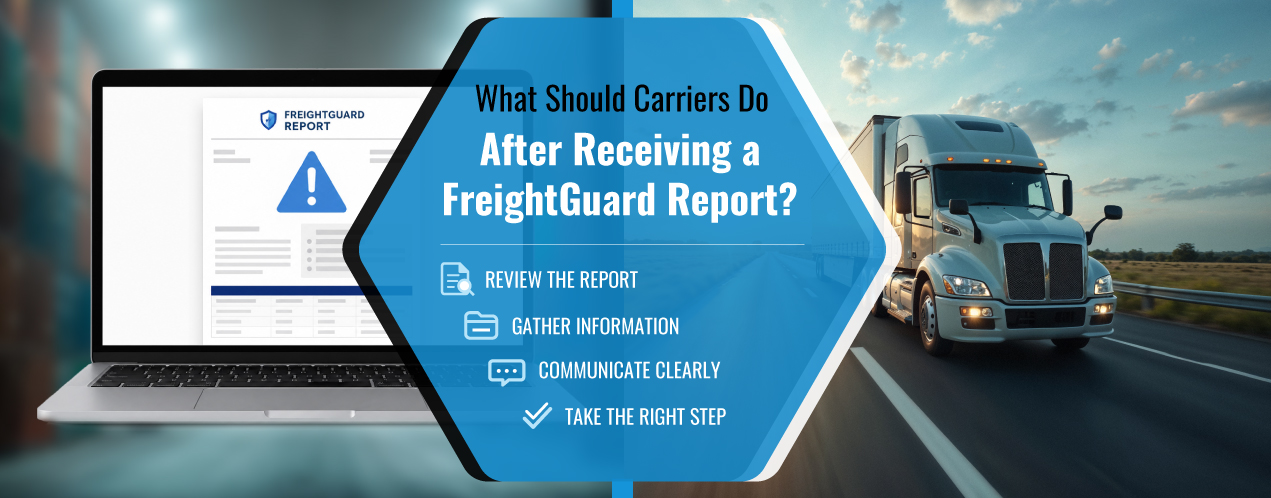
What Should Carriers Do After Receiving a FreightGuard Report?
Receiving a FreightGuard Report can be stressful for any trucking carrier. A carrier may immediately worry about broker trust, future load opportunities, business reputation, and how the report may be viewed during the carrier selection process. In that moment, the most important step is not to panic or respond emotionally. The first step is to understand what the report says, what it relates to, and what options may be available.
A FreightGuard Report does not automatically define a carrier’s entire business. In many cases, a report may involve a service issue, communication concern, delivery dispute, cargo-related matter, payment disagreement, identity concern, or another broker-carrier conflict. Some reports may involve serious allegations, while others may come from misunderstandings, missing information, or incomplete communication.
Because these reports may be reviewed by brokers and shippers, carriers should take them seriously and handle the matter in a professional, organized way.
Understand What the Report Says
The first practical step is to read the report closely. Before preparing any response, the carrier should understand the exact issue being raised.
- Which load does this refer to?
- Which broker submitted the report?
- What dates and locations are mentioned?
- What is the core complaint: communication, delivery, cargo, payment, re-brokering, tracking, equipment, or something else?
This matters because a general response is usually less effective than a response that addresses the exact concern. If the report claims a missed pickup, your response should focus on the pickup details. If it’s about a delay, focus on the timeline and communication around that delay. If the concern involves cargo or documents, the carrier should focus on the records that support its position.
A professional response begins with understanding the facts.
Pay Attention to Timing
Timing is very important. According to Carrier411, when a FreightGuard report is submitted, the reported company is notified by email and receives instructions about how to respond. Because response opportunities may be time-sensitive, carriers should not ignore the notice or wait too long before reviewing the report.
At the same time, responding too quickly without checking the facts can also create problems. A rushed response may leave out important information or use language that does not help the carrier’s position. The goal is to act promptly but carefully.
Before acting, carriers should read the report carefully, check on the details, verify company records, and determine whether any expert assistance will be necessary.
Compile Necessary Documents
When the carrier has reviewed the report, the carrier should then collect the necessary documents. This can include rate confirmations, bills of lading, delivery confirmations, signed delivery receipts, emails, text messages, portal messages, dispatch notes, call logs, GPS records, ELD data, repair invoices, tow bills, service reports, photos of equipment or freight, payment records, and invoice history.
The aim is to create a timeline of events. What happened first? When did the issue start? Who was contacted? What was said? What documents support the carrier's view?
A response that is detailed, structured, and easy to understand is much more effective than a simple message stating, “We do not agree.” Facts, documents, and timelines will provide brokers and other readers with a better picture of your position.
Avoid Emotional or Aggressive Responses
It is understandable to feel frustrated, especially if you believe the report is unfair, incomplete, or inaccurate. However, angry emails, threats, repeated calls, or emotional replies almost always make the situation more difficult to manage.
Carriers should keep communication professional. The response should focus on the issue, not frustration. It should explain what happened, refer to supporting information, and avoid language that could appear aggressive or careless.
In trucking, reputation is built not only by how a carrier handles successful loads, but also by how the carrier handles problems. A clear, respectful response helps demonstrate that your company takes the matter seriously and is committed to resolving concerns in a professional way.
Review Whether the Report Tells the Full Story
Not every dispute is simple. A delay may involve traffic, weather, mechanical failure, shipper delays, receiver delays, incorrect appointment times, missing instructions, or other circumstances outside the carrier’s control. A payment dispute may involve missing paperwork, deductions, accessorial charges, or unresolved claim issues.
That is why carriers should look beyond the report itself and review the full situation. Identify what is accurate, what may be incomplete, and what needs clarification.
If you believe part of the report is incorrect or misleading, focus on showing why through your records, your timeline, and clear communication rather than relying on broad statements.
When Professional Support May Be Helpful
Some FreightGuard-related concerns are straightforward. Others may involve serious allegations, business reputation, contract issues, cargo claims, unpaid invoices, identity concerns, or possible legal exposure. In those situations, professional support can be more valuable.
Professional support may help carriers understand the concern, organize relevant documents, identify key facts, and draft a response that is clear, factual, and professional. Legal consultation may also be appropriate when the situation involves serious claims or possible damage to business reputation.
Why This Matters for Carriers
A FreightGuard Report should not be ignored. Even if it doesn’t tell the full story, brokers may still review it when making carrier-selection decisions
The strongest approach is to stay calm, understand the concern, gather records, review the timeline, and respond professionally. This helps the carrier present its side more clearly and avoid making the situation worse through rushed or emotional communication.
For carriers, reputation is a business asset. Protecting that reputation starts with how the issue is handled.
Professional Support Through Avolve
For FreightGuard Report-related matters, Avolve connects carriers with verified professionals who can help review the concern, organize supporting information, and understand possible next steps. Avolve does not guarantee removal, deletion, correction, or any specific result. Every situation depends on the facts, documentation, platform rules, broker communication, and applicable legal considerations.
Concerned about a FreightGuard Report?
- Contact Avolve Trucking Solutions to connect with professional support to take a more informed, structured approach rather than facing the issue alone.
- Call at +1 866-212-2276
- Email us at info@avolve.info
- Or visit avolve.info to connect with professional support for reviewing your concern and understanding possible next steps.