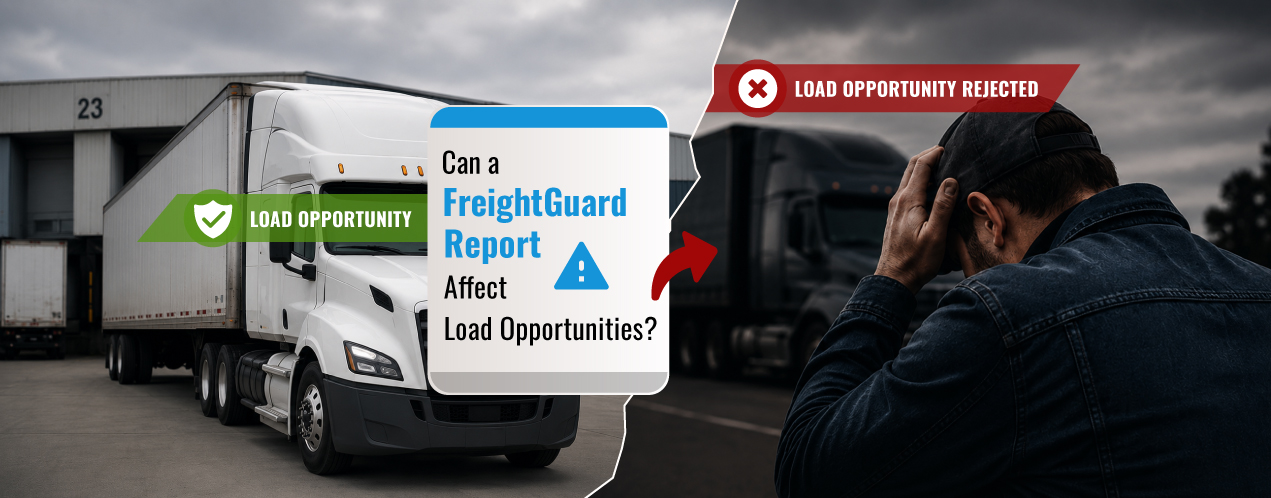
Can a FreightGuard Report Affect Load Opportunities?
For trucking carriers, every load opportunity depends on trust. Having available trucks, active authority, valid insurance, and competitive pricing is important, but brokers and shippers often look beyond the basics before choosing a carrier. They want to work with companies that communicate clearly, handle freight responsibly, and maintain a strong professional reputation. Even when a carrier has the right equipment and qualified drivers, its reputation can still influence how confidently a broker decides to assign a load.
One concern that many carriers take seriously is a negative FreightGuard report. When a report appears, the most common question is simple: can this affect my ability to book loads?
The answer is that a FreightGuard Report may affect load opportunities, depending on the nature of the report, the broker’s internal review process, the supporting details, and how the carrier responds. It does not automatically mean every broker will stop working with a carrier. However, because brokers often review carrier information before assigning freight, a negative report may create hesitation, additional questions, or a closer review of the carrier’s profile.
What Is a FreightGuard Report?
A FreightGuard Report is a report connected with Carrier411’s carrier-monitoring system. Carrier411 is used by brokers and shippers to research, qualify, and monitor trucking companies based on carrier information, safety data, performance concerns, and other business-related details. FreightGuard Reports may involve issues such as communication problems, service failures, delivery disputes, cargo-related concerns, unauthorized activity, identity concerns, double-brokering allegations, or other broker-carrier conflicts.
Not every report carries the same weight. Some reports point to serious problems, while others may result from simple misunderstandings, communication gaps, missing paperwork, or a disagreement between the broker and the carrier. It is not a reason to panic, but it is also not something to ignore.
If you never review the report, it can quietly shape how brokers see your company. If you review it carefully, gather your documents, and lay out a clear timeline of what actually happened, you put yourself in a much stronger position to respond professionally and protect your reputation.
Why Brokers May Pay Attention
Brokers have their own set of responsibilities: protecting the shipper’s freight, safeguarding customer relationships, and keeping service failures to a minimum. Before awarding a load, many brokers review several parts of a carrier’s profile, such as:
- Operating authority and insurance status
- Safety and inspection history
- CSA-related information and score concerns
- Identity verification and fraud indicators
- Equipment details and capacity
- Reputation-related records, including FreightGuard Reports
In that context, a FreightGuard Report often becomes one more input in the decision-making process. If a broker sees a report that raises concerns about reliability, communication, delivery performance, or overall business conduct, they may pause. Some will reach out and ask for additional context. Others may simply choose a different carrier if they believe there is less perceived risk.
That does not mean the report always tells the whole story. In trucking, problems can stem from breakdowns, severe weather, shipper or receiver delays, incorrect appointment information, road closures, payment disputes, or unclear instructions from any party involved. The challenge is that when a broker quickly reviews a carrier profile, they usually do not see all of that context right away.
A negative FreightGuard Report may reduce load opportunities if it causes brokers to question whether a carrier is dependable for a shipment. Freight is time-sensitive, and brokers often make decisions quickly. When two carriers are available for the same load, reputation can become a deciding factor.
For example, if a report suggests missed communication, load abandonment, unauthorized re-brokering, late delivery, cargo issues, or unresolved conflict, a broker may view the carrier as a higher-risk option. Even if the carrier has a reasonable explanation, the concern may still need to be addressed in a clear and professional way.
The impact can vary. Some brokers may rely heavily on reputation-related platforms. Others may look at the full picture, including safety data, past performance, direct communication, and supporting documents. That is why the carrier’s response and documentation matter.
Why Addressing the Report Matters:
Ignoring a FreightGuard Report can make the situation harder to manage over time, especially if brokers continue reviewing the report without seeing the carrier’s side of the story. A clear response, organized documentation, and professional support can help carriers better understand the concern and prepare for possible next steps. Taking action does not guarantee a specific outcome, but it shows that the carrier is treating the issue seriously.
The Bottom Line
A FreightGuard Report can affect load opportunities because it may influence how brokers view a carrier during the selection process. The level of impact depends on the nature of the report, how the broker evaluates reputation-related information, and how professionally the concern is addressed.
This is why carriers should not ignore FreightGuard Reports. These reports may be reviewed by decision-makers before loads are assigned, and they can influence trust at an important point in the booking process.
Conclusion
FreightGuard Reports matter because broker trust plays a major role in carrier selection. A report does not always tell the full story, but it can raise questions about reliability, communication, or business conduct. Understanding the concern is the first step toward protecting your reputation and making an informed decision about the next step.
Concerned about a FreightGuard Report?
- Contact AVOLVE TRUCKING SOLUTIONS today at +1 866-212-2276
- Email us at info@avolve.info
- Or visit avolve.info to connect with professional support for reviewing your concern and understanding possible next steps.