How to Improve Your CSA Score: A Step-by-Step Guide for Trucking Carriers
If you've read our previous post on what a CSA Safety Score is, you already know it's not just a number sitting in a government database. It influences who loads your trucks, what you pay for insurance, and how much attention regulators pay to your operation.
The good news is that CSA scores respond to your actions. Carriers that build consistent safety habits and address violations promptly see real improvement over time.
If you're looking to strengthen your safety profile and reduce the risk of violations, the following steps can help you improve your CSA performance and maintain a safer, more efficient operation.
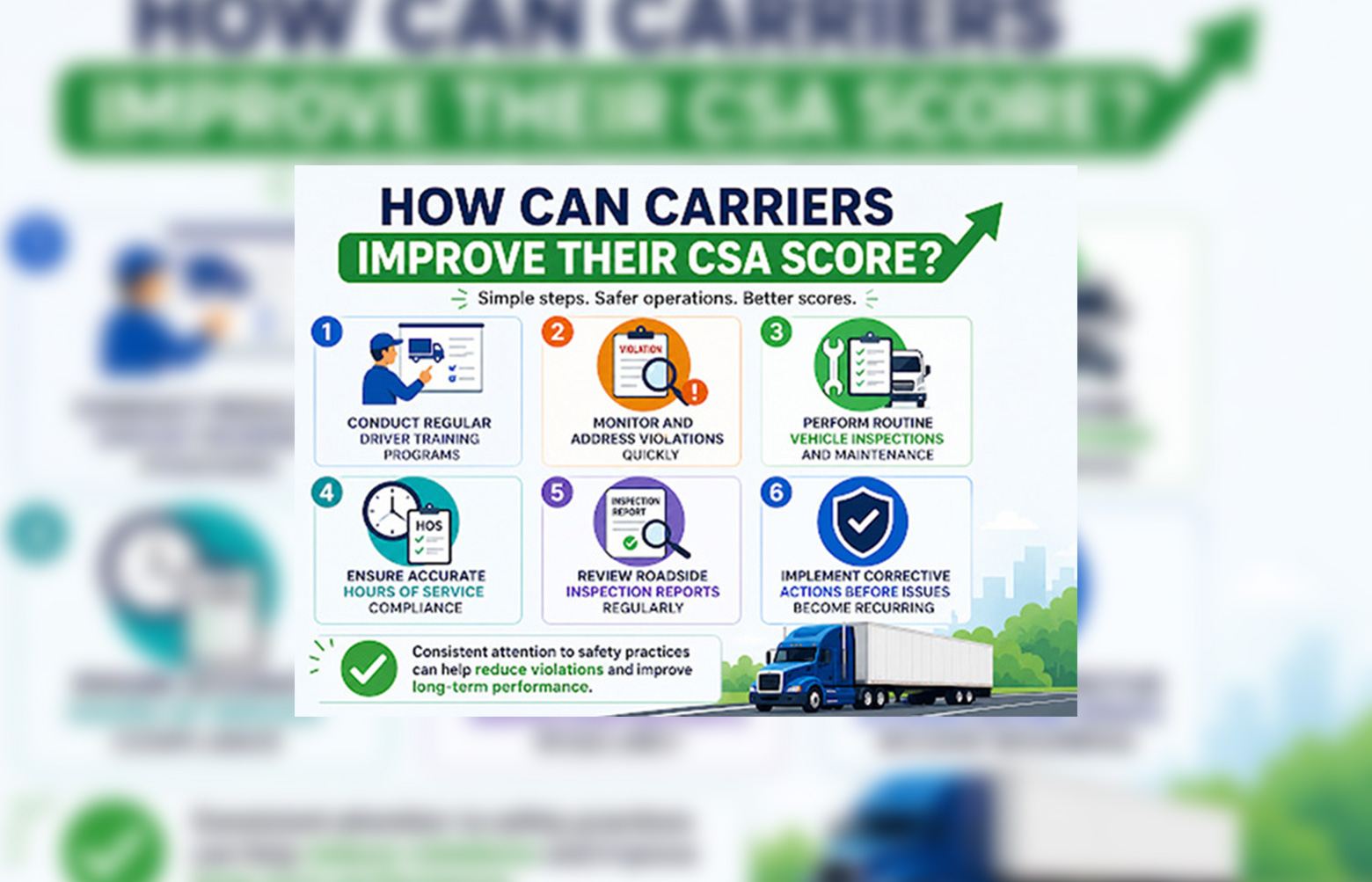
Conduct Regular Driver Training Programs
Most violations don't happen because drivers don't care. They happen because habits slip, regulations change, and nobody catches it in time.
Regular training keeps your team aligned and gives you a chance to address unsafe behaviors before they show up on an inspection report. It doesn't need to be formal or expensive. A monthly safety briefing or a debrief after any incident goes a long way. What matters is that it's consistent and tied to real data from your own operation. Targeted training beats generic training every time.
Monitor and Address Violations Quickly
A single violation rarely defines your score. What defines it is whether that violation gets addressed or quietly adds to a growing pattern.
The FMCSA's SMS gives more weight to recent violations and flags carriers with repeated issues in the same BASIC category. When a violation comes in, review it immediately, understand what happened, and act on it. Document the corrective action. The carriers that manage their scores effectively treat each violation as information, not just paperwork.
Perform Routine Vehicle Inspections and Maintenance
Vehicle maintenance is one of the most impactful BASICs when it comes to out-of-service orders. Brakes, tires, and lights are the first things inspectors look at, and violations here move your BASIC percentile quickly.
Pre-trip and post-trip inspections exist for a reason. When drivers take them seriously and maintenance teams follow through on reported defects, problems get caught before they become violations. Keep records, track repair history by unit, and investigate any truck that keeps coming back with the same issue.
Ensure Accurate Hours of Service Compliance
HOS compliance is one of the most scrutinized areas in FMCSA enforcement. ELD mandates have reduced falsification, but violations still appear regularly, and they take time to clear from your score. The most common issues are small ones: driving past the hour limit without realizing it, missed rest breaks, or incorrect personal conveyance entries. Small errors repeated across a fleet add up fast.
Make sure your drivers understand the current rules in full, including any exemptions that apply to your operation. If you run cross-border routes, Canadian regulations apply on Canadian highways, and those rules differ from U.S. standards.
Review Roadside Inspection Reports Regularly
Every roadside inspection generates a record that feeds directly into your CSA percentiles. Most carriers only look at these records when something goes wrong. Carriers with stronger scores review them as a matter of routine. Look for patterns: the same driver, the same violation type, or the same vehicle. Patterns reveal things that individual incidents don't.
If brake violations keep appearing on a specific unit, that's a maintenance problem. If HOS violations cluster on a particular lane, that might be a scheduling issue. And if a violation looks inaccurate, you have the right to challenge it through the DataQ system.
Implement Corrective Actions Before Issues Become Recurring
This is where many carriers lose ground. They fix the immediate problem and move on, but they don't change anything to prevent it from happening again.
Corrective action means understanding why something happened and adjusting accordingly. That might be updating a training protocol, changing a maintenance schedule, or adding a step to your pre-trip checklist. Build a habit of documenting what happened, what you did, and what you changed. That record protects you in an audit and demonstrates that your operation takes safety seriously.
Consistent attention to safety practices can help reduce violations and improve long-term CSA performance. It doesn't happen overnight, but carriers that treat safety as an operational priority consistently perform better in the metrics that matter.
Conclusion
Improving your CSA score comes down to building habits that catch problems early, address them completely, and prevent them from returning. If you're dealing with violations that feel unfair, scores that don't reflect your actual operation, or compliance questions you can't get answered, Avolve can help.
From CSA score monitoring and DataQs challenge support to compliance dashboards and access to verified professionals, Avolve gives carriers the visibility and support to stay ahead of issues that affect their business.
- Contact AVOLVE TRUCKING SOLUTIONS today at +1 866-212-2276
- email us at info@avolve.info
- or visit avolve.info to learn more.