
What is a CSA Safety Score? Everything Trucking Carriers Need to Know
In today's trucking industry, safety and compliance are more important than ever. If you run trucks for a living, you already know this: it’s not just about keeping freight moving. It’s about keeping drivers safe, staying compliant, and protecting the reputation you’ve built mile after mile.
That’s where your CSA Safety Score comes in. You may not think about it every day, but shippers, brokers, insurers, and the FMCSA do. A strong score can open doors. A weak one can quietly close them.
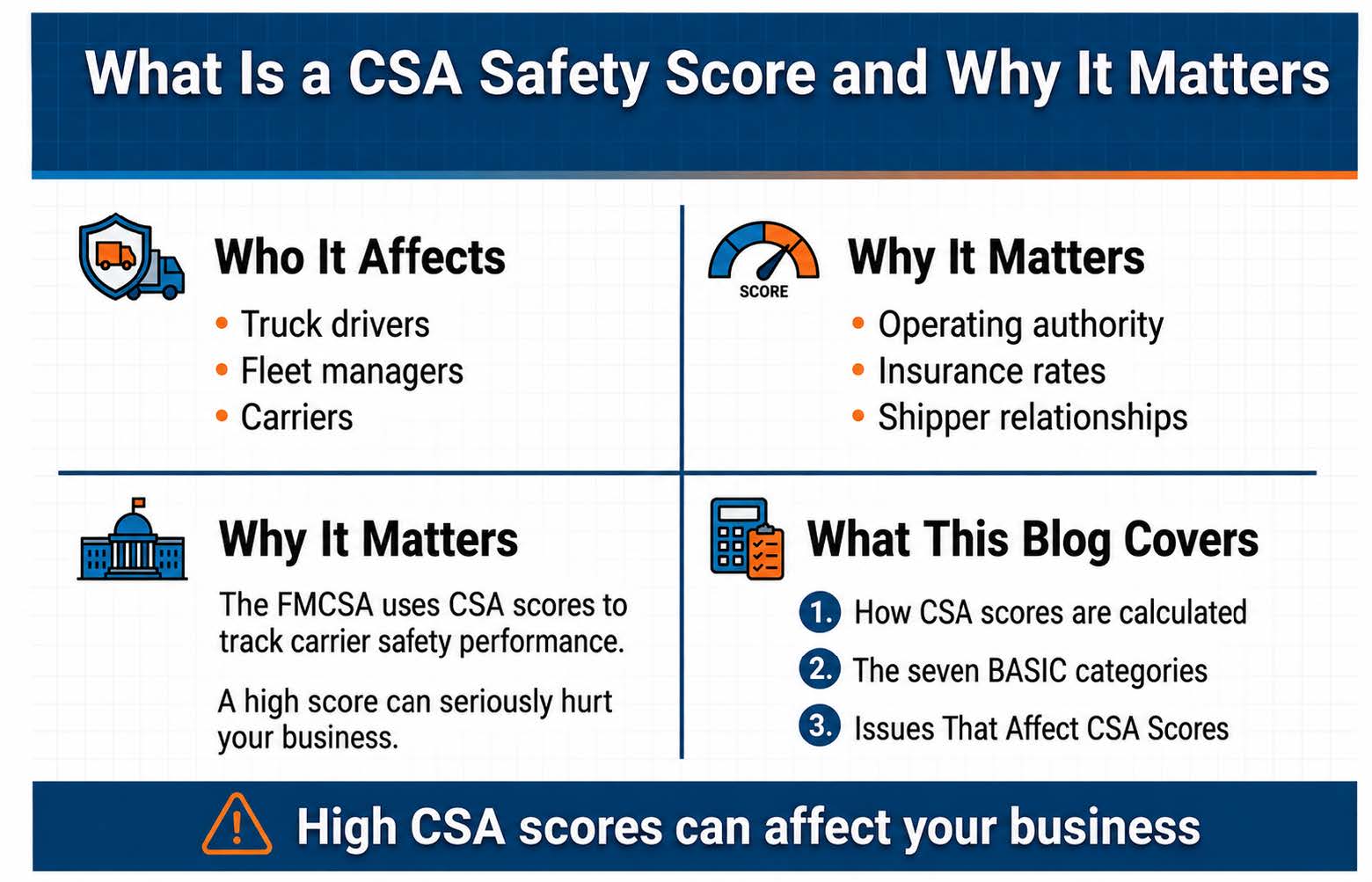
What Is a CSA Safety Score?
CSA stands for “Compliance, Safety, Accountability.” It’s a safety monitoring program created by the Federal Motor Carrier Safety Administration (FMCSA) to identify unsafe carriers and improve highway safety.
Instead of looking at one single number in isolation, CSA uses safety data from the following:
- Unsafe driving
- Hours of Service (HOS) violations
- Driver qualification issues
- Vehicle maintenance defects
- Crash history and accident involvement
- Drug and alcohol-related violations
That information feeds into your safety profile, often referred to in the industry as your CSA Safety Score. The idea is simple: reward carriers that consistently operate safely and put pressure on those that don’t.
In practice, that score can affect almost everything- who will load your trucks, how much you pay for insurance, and how often you hear from regulators.
How Are CSA Scores Calculated?
The FMCSA groups safety-related violations into categories called BASICs (Behavior Analysis and Safety Improvement Categories). Each BASIC focuses on a different aspect of safety and compliance.
Key basics include:
| Unsafe Driving | Speeding, reckless driving, following too closely, improper lane changes. |
|---|---|
| Crash Indicator | Crash history and patterns in your crash involvement. |
| Hours of Service (HOS) Compliance | Violations related to driving beyond allowed hours, logbook and ELD issues, and false logs. |
| Vehicle Maintenance | Defects like brakes, lights, tires, load securement, and out-of-service violations. |
| Driver Fitness | Issues with licensing, medical certificates, and driver qualification files. |
| Controlled Substances/Alcohol | Drug- and alcohol-related violations or test refusals. |
| Hazardous Materials Compliance | When applicable, problems with placarding, packaging, or handling hazmat. |
Not all violations are treated equally. Some carry more weight because they represent a higher risk to safety. A handful of serious violations or a pattern of recurring problems can move your BASIC scores in the wrong direction much faster than a few minor issues.
On top of that, recency and frequency matter:
- Recent violations hurt more than old ones.
- Repeated violations in the same BASIC can suggest a systemic problem.
That’s why one isolated violation is rarely the problem. Carriers that address issues quickly can recover, while those that ignore recurring violations often see their CSA percentile scores rise over time.
Why Your CSA Safety Score Matters
You can run good freight, take care of customers, and still lose out on opportunities if your safety picture doesn’t look solid on paper.
A poor or worsening CSA profile can lead to the following:
- More FMCSA attention- Interventions, warning letters, audits, and compliance reviews.
- Higher insurance premiums- Insurers closely monitor safety history and price accordingly.
- Lost freight opportunities- Many shippers and brokers filter out carriers with weak safety scores before they even pick up the phone.
- Damage to reputation- In a crowded market, a reputation for unsafe operations sticks faster than a reputation for on-time delivery.
On the other hand, a strong CSA safety score sends a clear message:
"This carrier takes safety and compliance seriously. They’re a lower risk and a better long-term partner.” For many carriers, that’s the difference between fighting for every load and being the first call when freight needs to move.
Issues That Affect CSA Scores
Most carriers don’t suddenly become “unsafe.” More often, it’s a gradual accumulation of small issues that go unaddressed over time.
Some of the most common problem areas include speeding and unsafe driving behaviors, Hours of Service (HOS) violations, inadequate pre-trip and post-trip vehicle inspections, incomplete or outdated driver qualification files, and poor post-crash management. This can include failing to investigate incidents, identify root causes, implement corrective actions, or strengthen internal safety procedures.
None of these challenges are mysterious. They are everyday operational issues that can be managed and improved with the right visibility, oversight, and processes.
Conclusion
Your CSA Safety Score is more than just a compliance metric. It reflects how seriously carriers take safety, professionalism, and operational discipline.
When you understand what drives that score and how violations are weighted, you can:
- Reduce risk on the road.
- Protect your reputation with shippers, brokers, and insurers.
- Build a stronger, safer, and more competitive operation.
With the right tools and visibility, maintaining a strong safety profile is no burden anymore, but a real competitive advantage.
Avolve Trucking Solutions was created to help carriers be more proactive in their safety and compliance by giving them better visibility into the issues that can affect their performance. Carriers are able to detect trends early and act before problems become larger issues, rather than responding to problems after the fact.